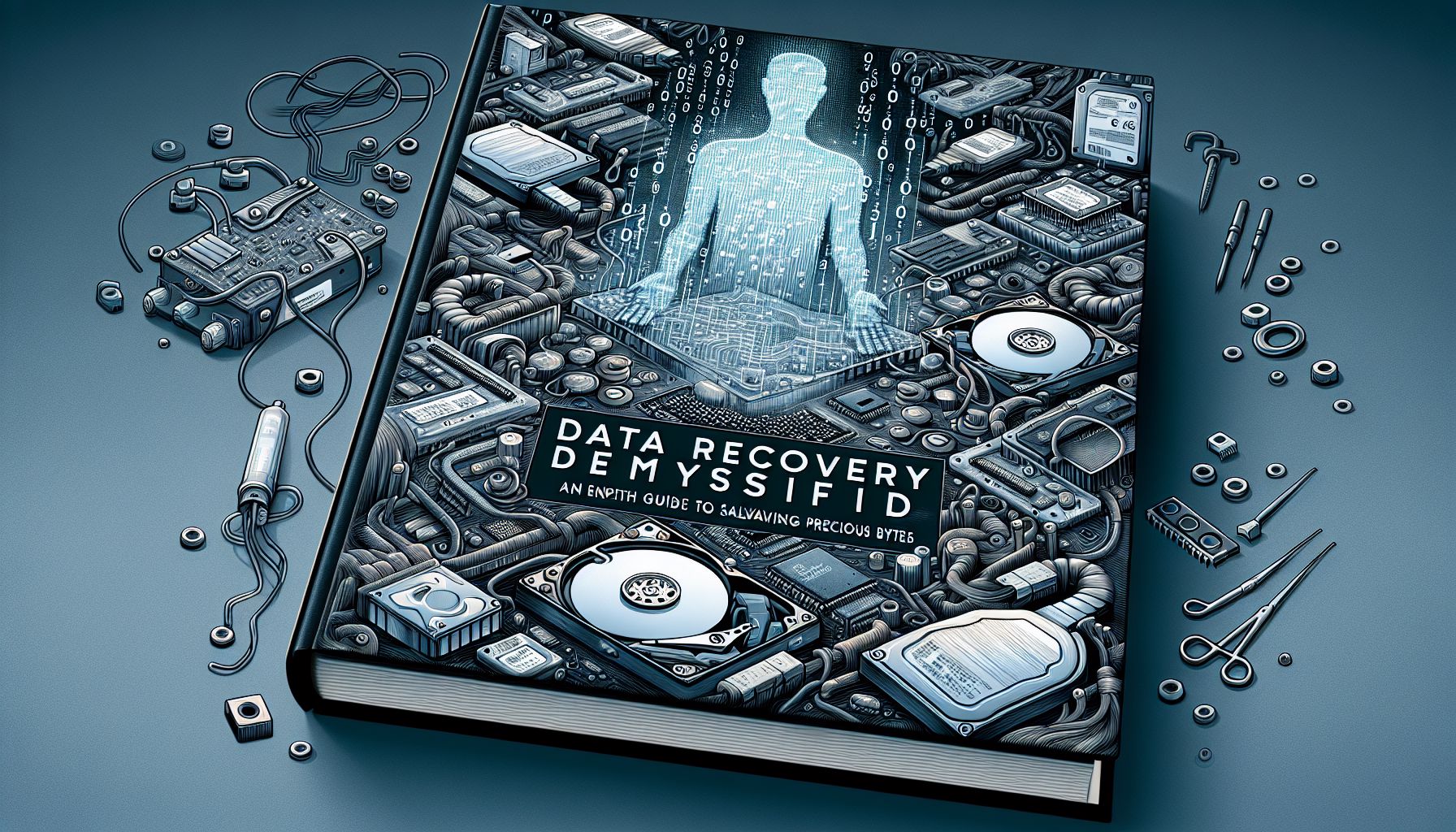
Greetings, tech enthusiasts! Today, we’ll be diving headfirst into the immersive world of data recovery. As our enduring reliance on digital data continues to grow, understanding the process involved in its retrieval post-disaster becomes increasingly critical.
Introduction
Data recovery, in its most fundamental form, refers to the process of retrieving inaccessible, lost, corrupted, damaged, or formatted data from secondary storage, removable media, or files when the data stored in them cannot be accessed in a usual manner. The essentiality of data recovery has only escalated as we’ve ventured further into the digital age, with companies and individuals alike finding their most valuable assets not in physical, but digital form.
The Nuts and Bolts of Data Recovery
Data can be lost for myriad reasons, such as hardware or system failure, software corruption, accidental deletion, or even physical disaster. The process of recovery depends heavily on the manner and the extent of the data loss.
Hardware or System Failure
In this case, the physical components of the storage media are likely damaged and will require repair before data recovery can ensue. For instance, in hard drives, this could be a head crash where the read-write head of a hard disk drive touches its rotating platter, resulting in damage to the magnetic media, or even a burned controller board. Data recovery specialists utilize bespoke equipment in clean rooms to repair these physical damages and subsequently retrieve the data.
Software Corruption or Accidental Deletion
If software corruption, virus attack, or accidental deletion is the cause of data loss, the system usually leaves a shadow of the deleted or corrupted files that can be recovered using specialized software tools. These tools function by scanning areas of the disk not currently in use by files for remnants of lost data. A comprehensive knowledge of file structures and data storage is key to retrieving the maximum data possible in such scenarios.
Physical Disaster
In the event of physical disasters like flood or fire, recovery can be especially tricky. It often involves a combination of physical repair and software-based data recovery methodologies.
Specialized Techniques
For more complex cases, or when common techniques fail to recover the data, more specialized techniques may come into play.
For instances, a process called ‘Data Carving’ comes handy when file system metadata that points to the chunks of the file data is missing, in which case experts dredge through disk sectors looking for specific file signatures.
The Importance of Regular Backup
While recovery is usually possible, it’s not always guaranteed and can often be pricey, especially for hardware-based issues. Therefore, prevention is always the best cure. Regular backups, practiced correctly, are the most effective safeguard against data loss. The use of both local and cloud-based solutions provides multiple layers of security in the event of a disaster.
Conclusion
In an era of rampant data accumulated every day, data loss is a costly prospect. While experts are continually devising new and improved methodologies for data recovery, there’s no substitute for a good defense – regular, comprehensive backups, and good system hygiene reduce the odds of data loss incidents.
Moreover, remember that data recovery is best conducted by professionals. Many well-meaning attempts by hobbyists end up causing further damage to the storage media, making professional recovery even more complicated, or in the worst cases – impossible. Therefore, when it comes to critical data recovery, always consider seeking help from the experts.